Selected work
Building a Growth System
From scattered bets to a confident portfolio
Challenge
Target had no formal process for evaluating, funding, or governing new business opportunities. Growth investments were ad-hoc, portfolio strategy was reactive, and too many good ideas were competing for attention without a system to separate the signal from the noise.
What I Built
Helped architect and implement Target's enterprise Growth Board, a quarterly capital allocation system with 8 C-suite leaders that brought discipline and consistency to how Target evaluated and funded new businesses. The board created a shared language for growth across the enterprise and formalized what had previously been informal, fragmented decisions.
Impact
Established governance for $5M in annual growth investments, created a portfolio prioritization framework, and institutionalized how Target moves from early experiment to enterprise-scale business. For the first time, the organization had a repeatable system for making confident growth bets.

Challenge
At 55 weeks from concept to shelf, Target's apparel time-to-market couldn't compete with fast-fashion players. The business needed a fundamentally different operating model, one that could move at the speed of trend without sacrificing the margin discipline Target required.
What I Built
Created and operated a digital-first apparel model that reimagined the full product lifecycle journey, from trend identification to customer delivery. The model didn't just move faster. It was designed from the ground up to be faster, treating speed as a structural feature rather than an operational goal.
Impact
Cut time-to-market by 80% (from 55 weeks to 5 weeks) while improving margins by 22%. Validated a $250M to $500M+ digital revenue roadmap and directly informed enterprise strategy across apparel and adjacent categories.
Article - Inside Target’s Trend Machine
Fast Apparel & Accessories Model
Proving speed and discipline can coexist

Food & Beverage Innovation Pipeline
Turning consumer needs into a billion-dollar pipeline
Challenge
Target's Food & Beverage innovation process lacked focus and shared decision-making tools. Ideas were plentiful but prioritization was inconsistent, making it difficult to place confident bets or build a coherent portfolio strategy that the full organization could rally behind.
What I Built
Redesigned the F&B innovation pipeline end-to-end. Aligned cross-functional teams around three consumer need states (Easy Meals, Gatherings, and Snacking) and introduced shared portfolio frameworks and business-case tools to guide investment decisions from concept through commercialization. The work gave teams a common language for evaluating ideas and a clearer path for moving the best ones forward.
Impact
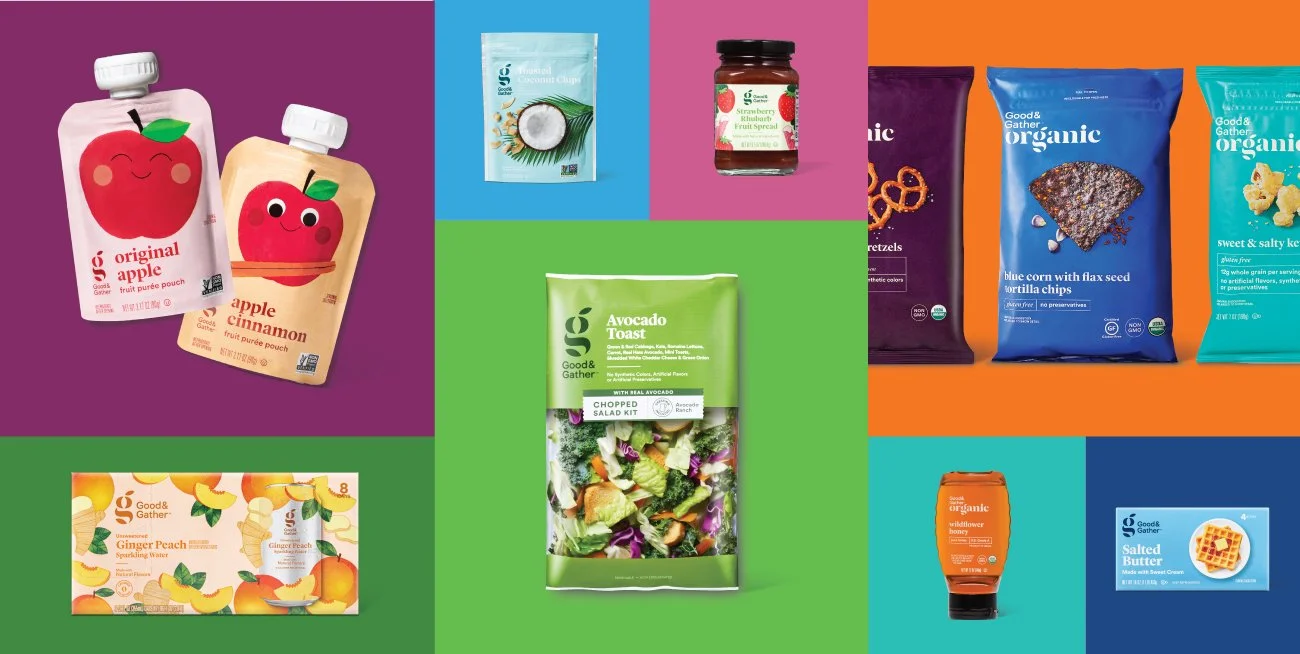
Helped fuel Good & Gather's growth from $2B to nearly $4B in annual revenue, reaching approximately 40% category penetration, and repositioned Food & Beverage as a primary reason to choose Target over competitors.
Article - Target Unveils Good & Gather
Target Services (Founding Team)
Designing services to simplify everyday life
Challenge
Services represented a genuine white space opportunity for Target, but the organization had no operating model, no portfolio strategy, and no proven service-based revenue platforms to build from. This was a zero-to-one problem in the middle of a $100B+ retailer.
What I Built
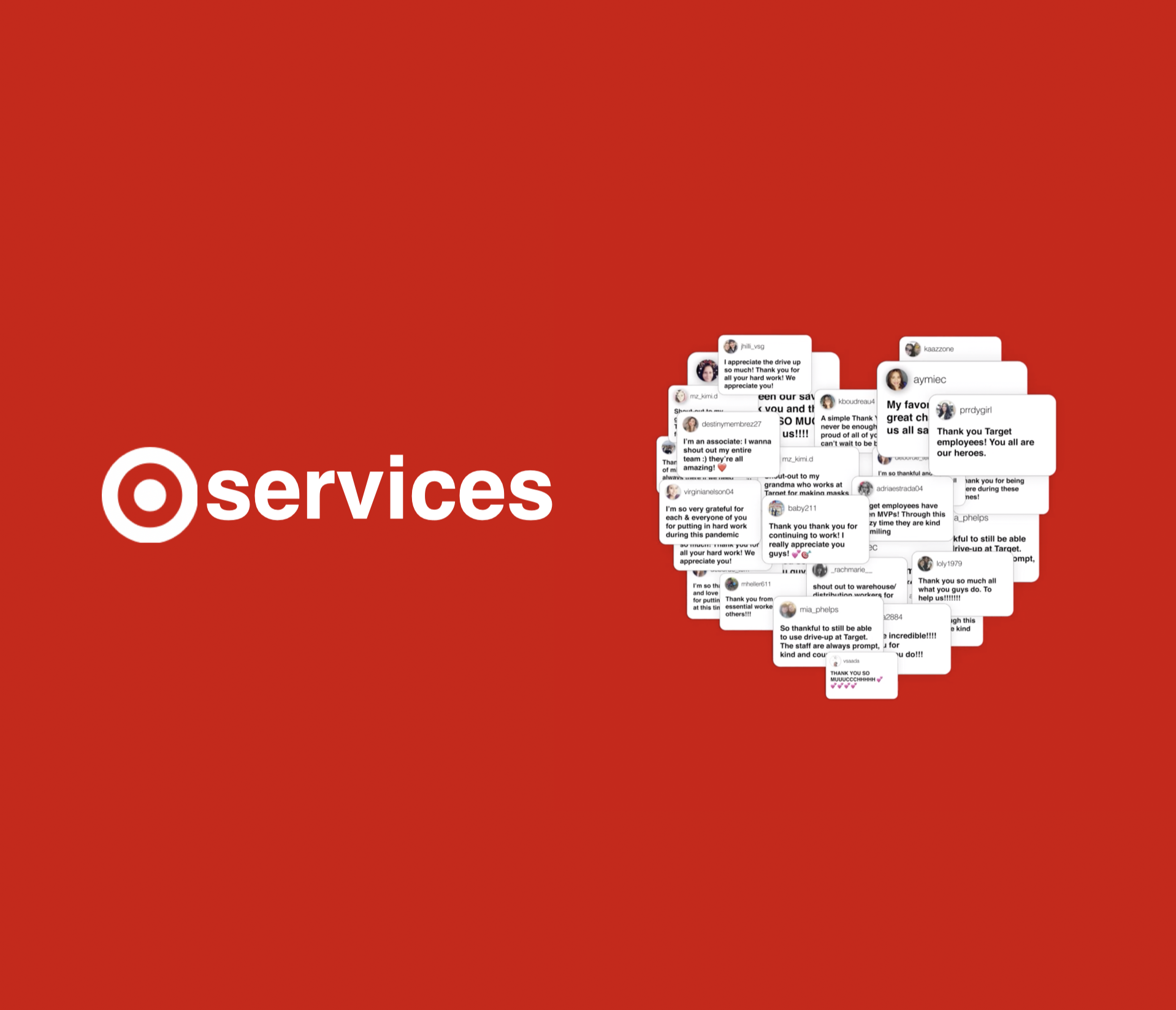
As a founding team member, I helped build Target's Services business from concept to a functioning enterprise. That meant designing the operating model, running 40+ market tests across service concepts, advancing 4 to full commercialization, and exiting 7 others early to protect capital and margin discipline. Every decision was made with the same question in mind: does this genuinely deepen customer engagement, or are we scaling for its own sake?
Impact
Grew the business to $550M+ in annual revenue with an NPS of 82 to 84, establishing a new diversified revenue stream and proving that restraint, knowing when not to scale, creates as much value as growth itself.
Loyalty & Relationships
From rewards program to relationship platform
Challenge
Target needed a retention platform that could compete with Amazon Prime and Walmart+, but traditional loyalty programs weren't differentiated enough to move the needle. Points and discounts alone weren't going to build the kind of relationship Target was after.
What I Built
Led loyalty strategy and experimentation behind Target Circle, designing the behavioral model and value architecture that defined how the program earned and deepened customer relationships. The work wasn't just about building a loyalty program. It was about understanding what actually changes customer behavior at scale and building a system around those insights.
Impact
Scaled from 2M pilot members to 80M+ members in 12 months, increased customer lifetime value 4x, and established Target's primary retention platform, now serving as the backbone of personalized marketing and engagement across the enterprise.

More examples available upon request.